K. Kuutvuori

Turning documentation into a product experience

Role
Product Designer
‍
Strategy · information architecture · visual direction · UI/UX · implementation support
Result
Reframed documentation from a standalone reference library into a connected product entry point, improving release discovery, version navigation and access to the wider product ecosystem.

The problem wasn't missing information.
It was finding the right information.

Overview

Kanzi documentation spanned multiple products, plugins and releases. Users struggled to find relevant updates, navigate versions and understand how the products related to one another.

Kanzi Studio was gradually transitioning from a legacy interface toward a renewed design system.

New and old patterns often had to coexist, so my role was to help bridge both systems while keeping workflows coherent and implementation realistic.

  1. Legacy UI

    • Established workflows
    • Existing patterns
    • Technical constraints
  2. Transition / Coexistence

    • Balance old + new
    • Introduce patterns gradually
    • Collaborate with developers
    • Maintain product coherence
  3. Renewed System

    • Reusable components
    • Interaction patterns
    • Accessibility
    • Emerging token workflows
Research

Through user interviews, team feedback and benchmarking, I found recurring friction around search, version navigation and release discovery, pointing to a broader problem than a visual redesign alone could solve.
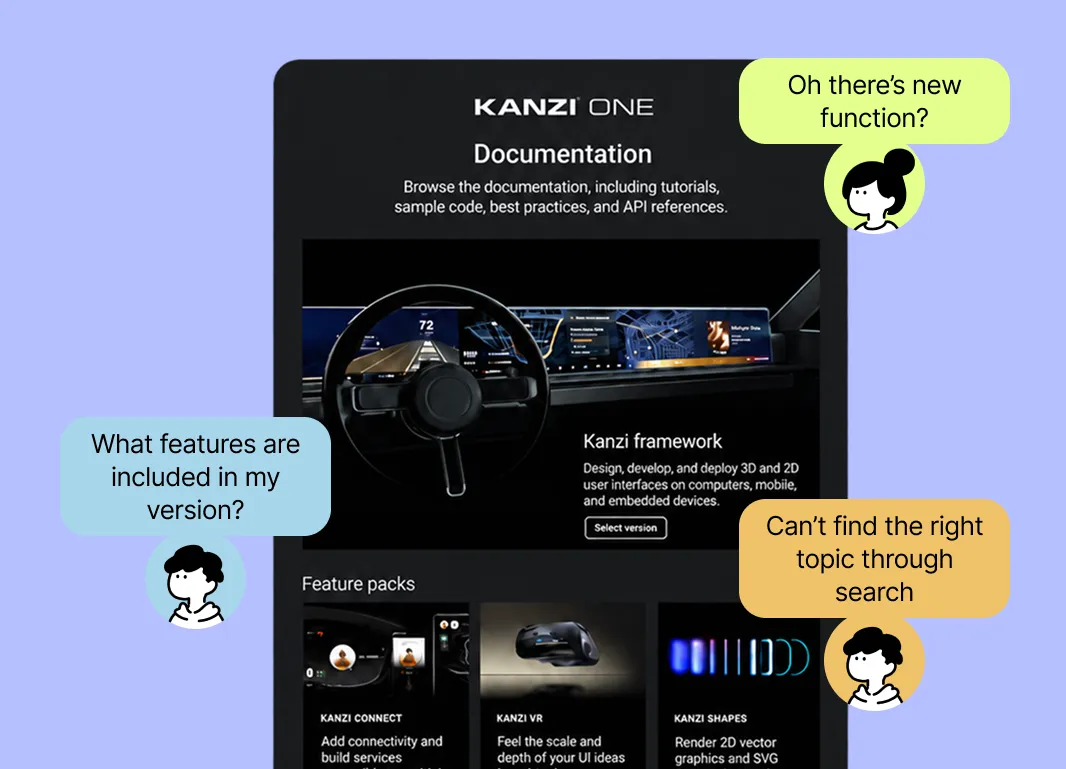
  • Finding information: Search was not trusted, and release updates were difficult to discover.
  • Understanding the product: Version navigation and relationships between products were unclear.
  • Maintaining the experience: Visual hierarchy was inconsistent, and users had no direct feedback channel.
User feedback collected for the Kanzi Documentation redesign

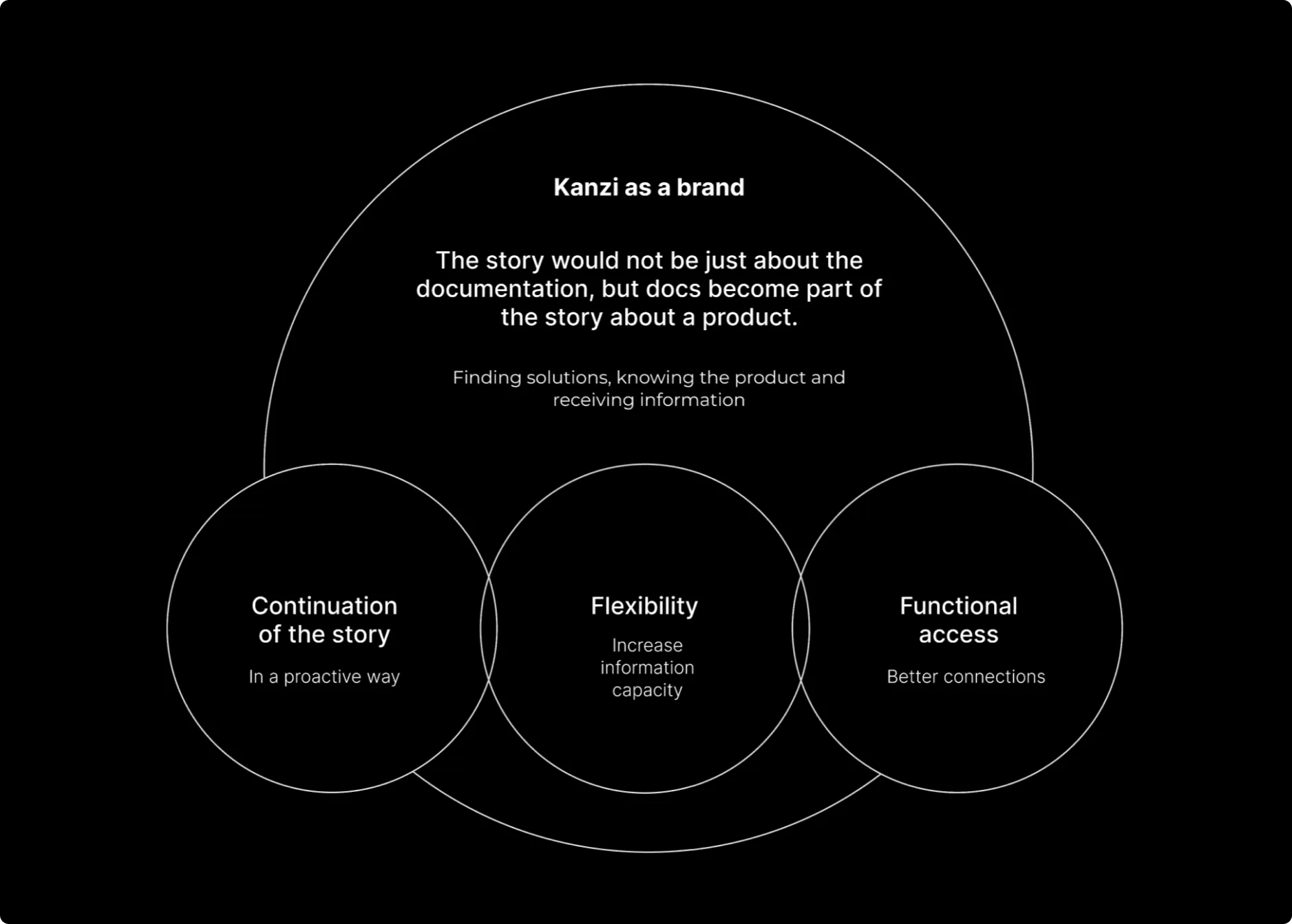
From documentation redesign to product strategy

Strategy for restructuring the Kanzi Documentation experience
The redesign became a question of what documentation should do.

I proposed repositioning documentation from a standalone reference library into a connected product entry point: helping users discover what was new, navigate supported versions, and move more easily between documentation, services and learning resources.
Translating the strategy into design decisions

Design for longevity

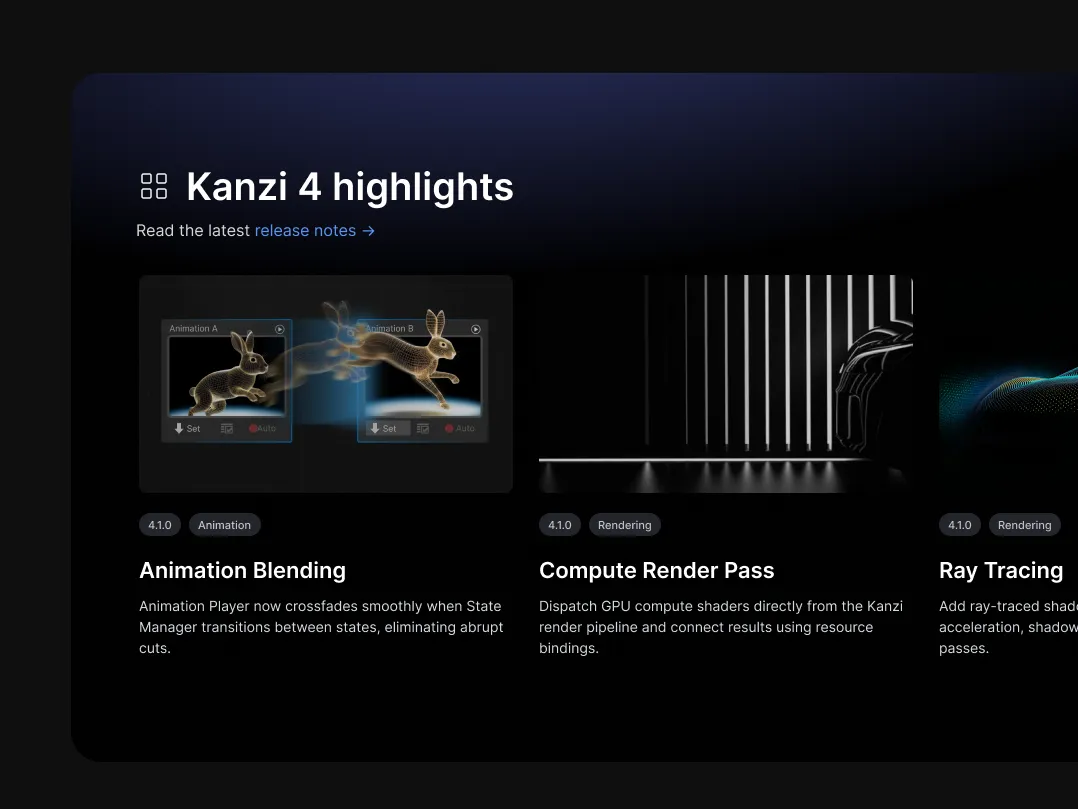
Surface what's new

Bring release highlights forward so users can discover new capabilities without searching for them.

Give supported versions a clear home

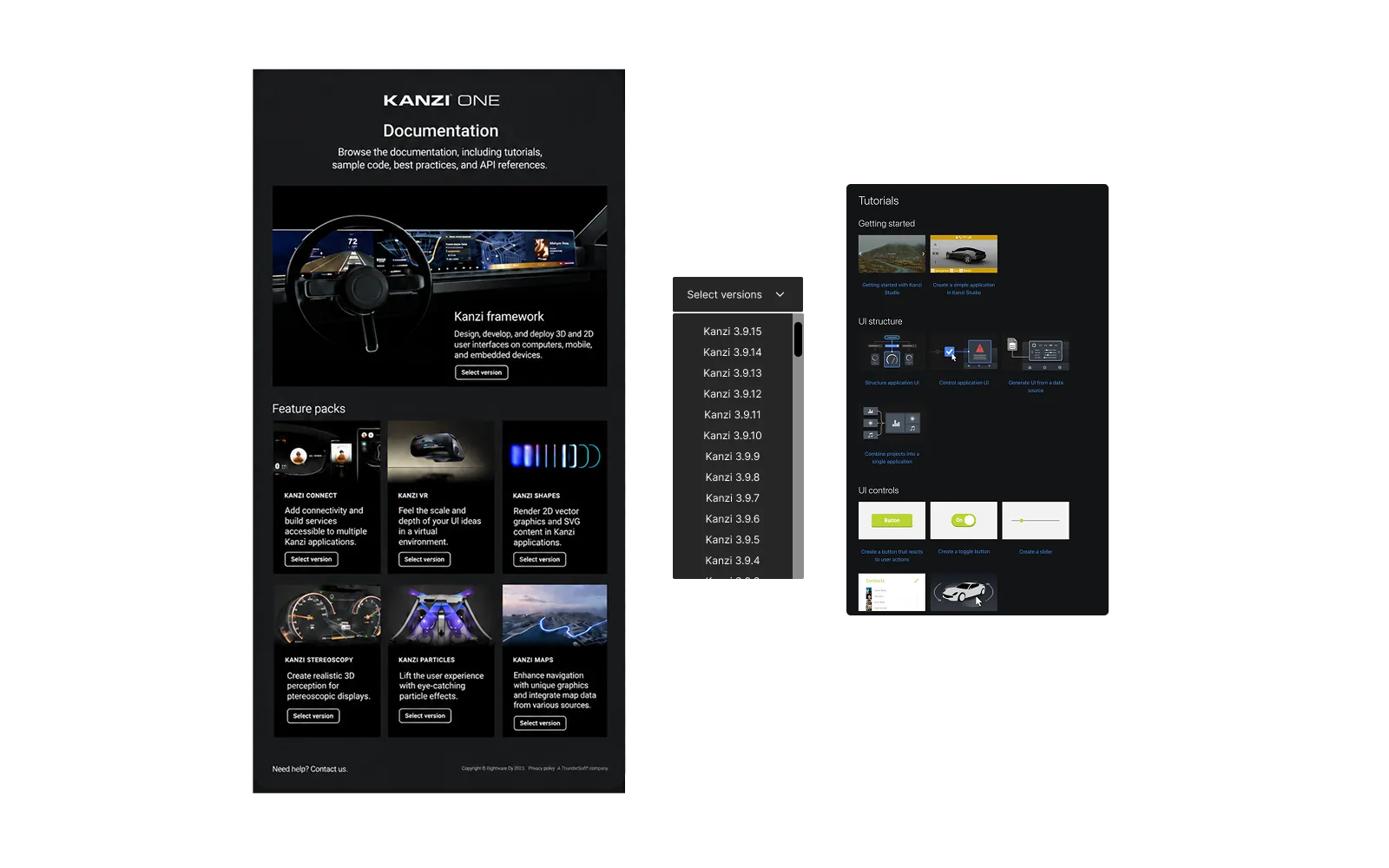
Create dedicated entry points for LTS releases, connecting each version with its relevant plugins and tools.
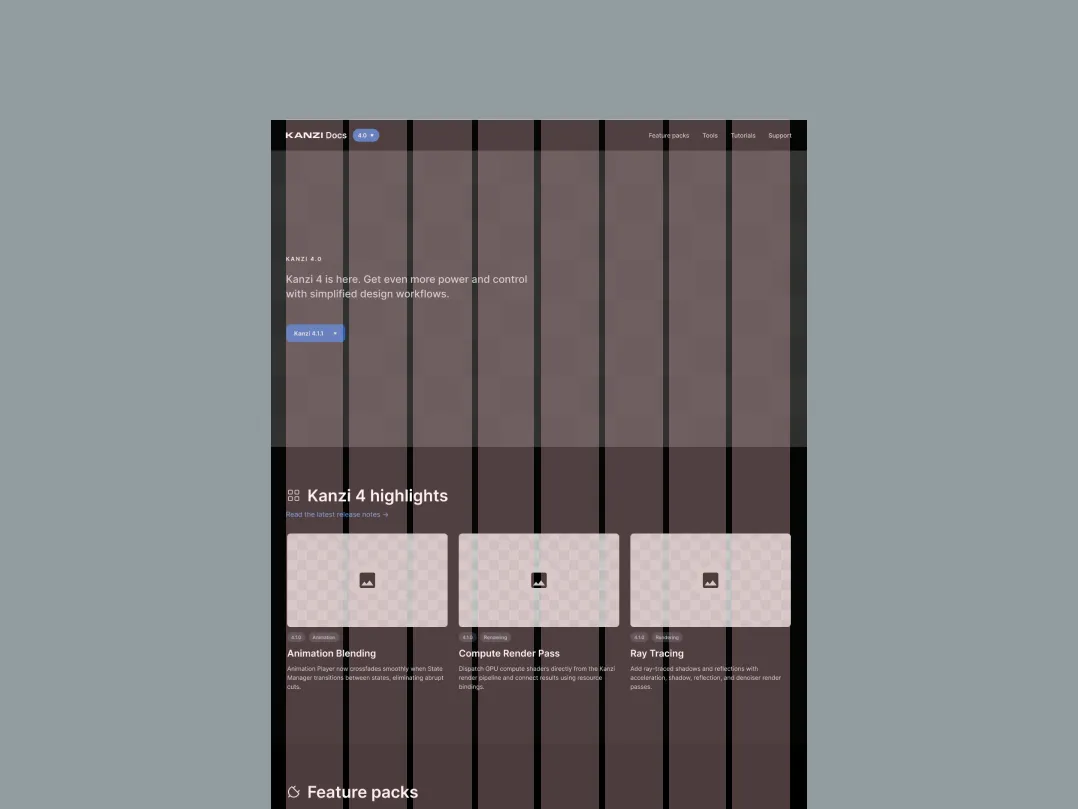
Design grid

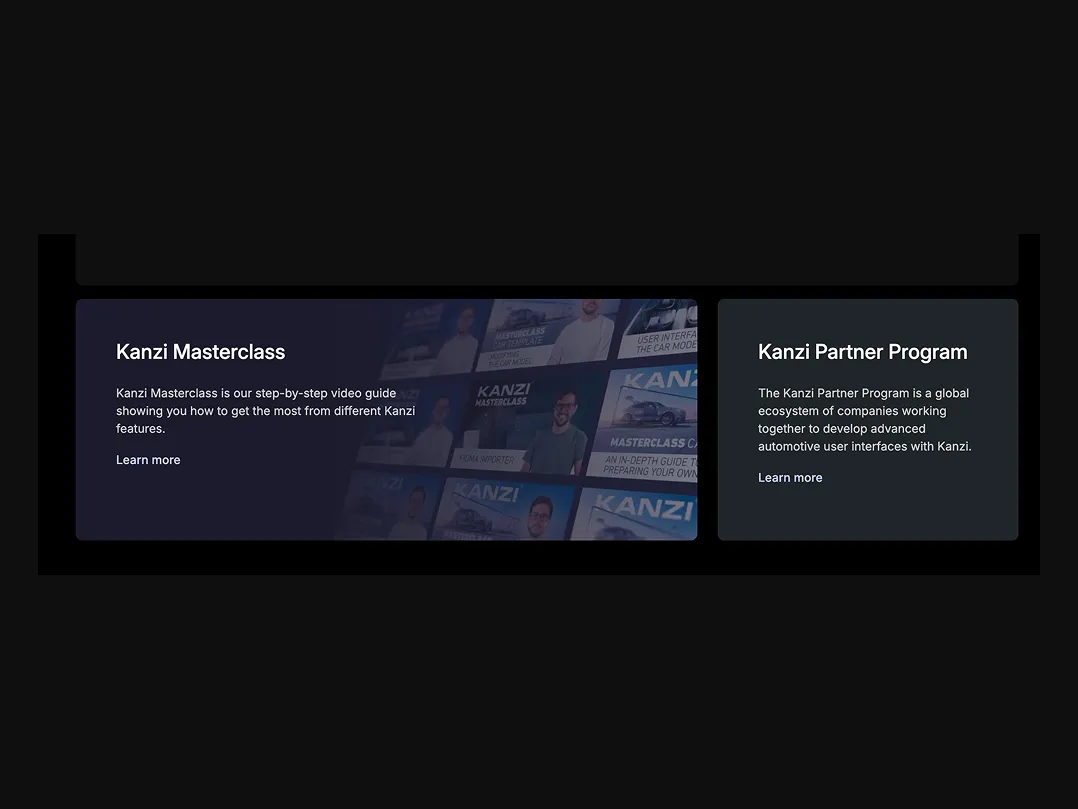
Connect documentation to the wider ecosystem

Bring learning, services and supporting resources into the same journey instead of treating them as separate destinations.

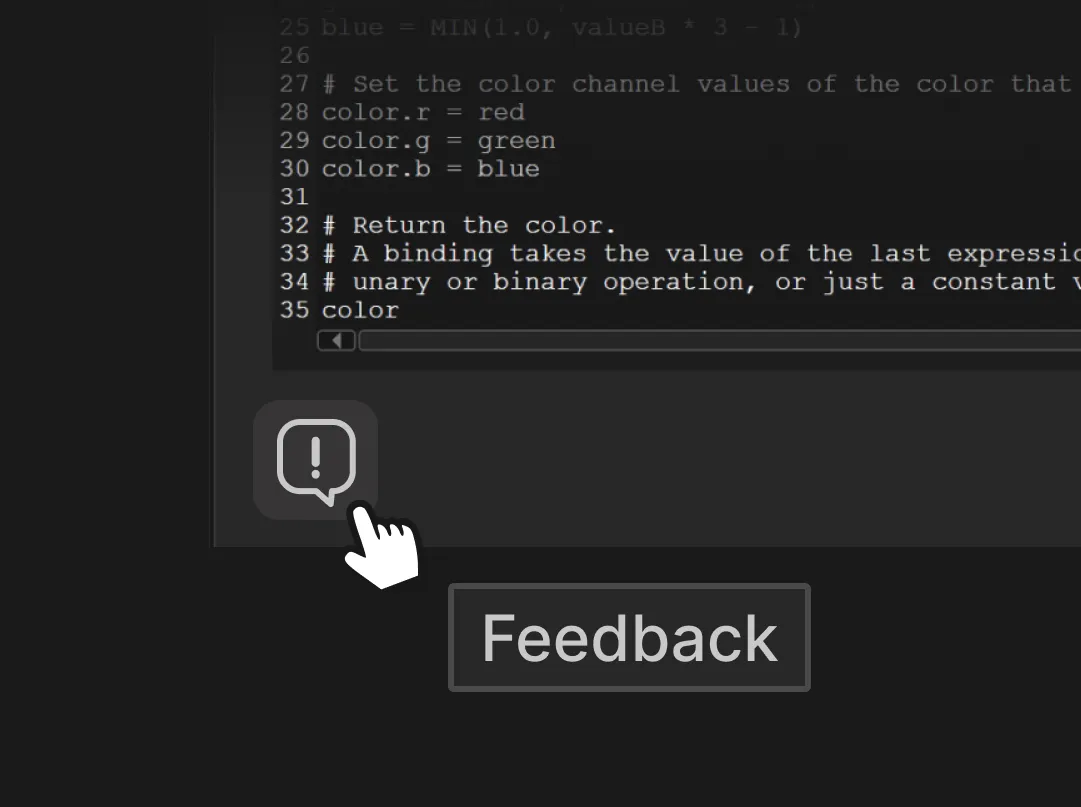
Turn feedback into a product signal

Combine in-page feedback with analytics so documentation and product teams can see where users are struggling.
Visual component design

The feedback model moved beyond documentation.

The feedback model later expanded into Kanzi Studio, where selected features now include feedback controls to capture user reactions directly in the product.
Design grid

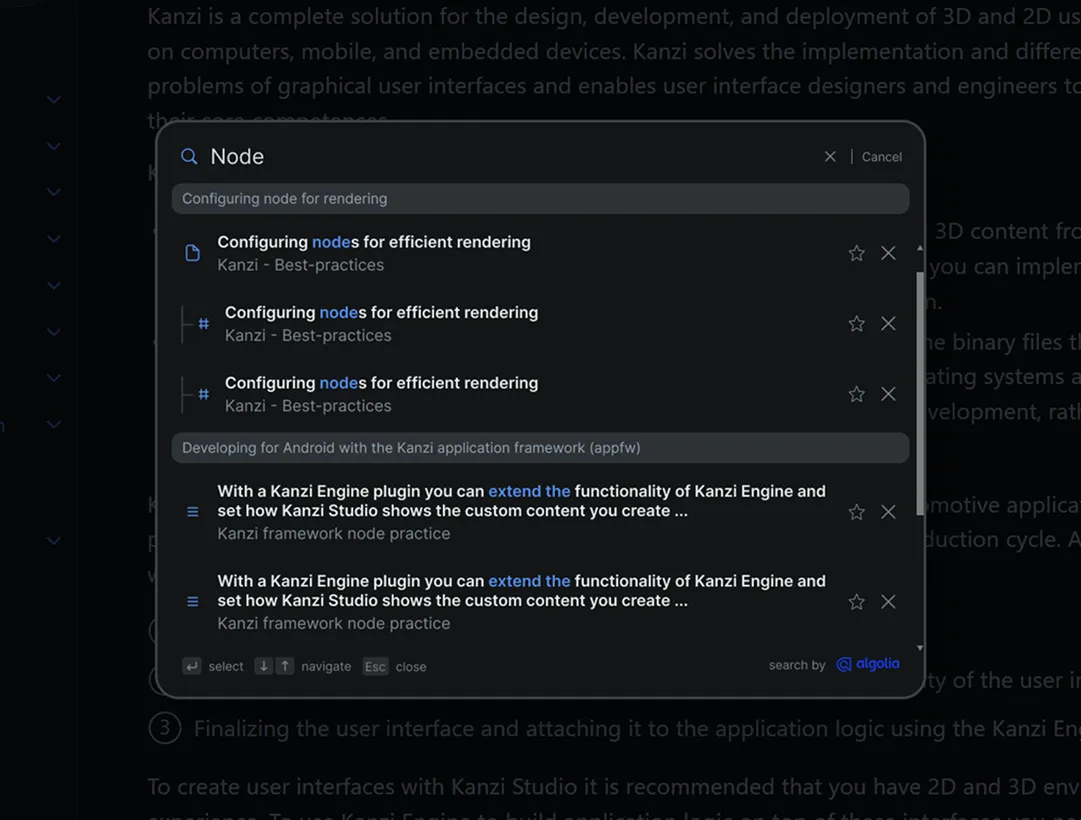
Make results easier to scan

Use clearer hierarchy and consistent styling so users can assess relevance before opening a result.
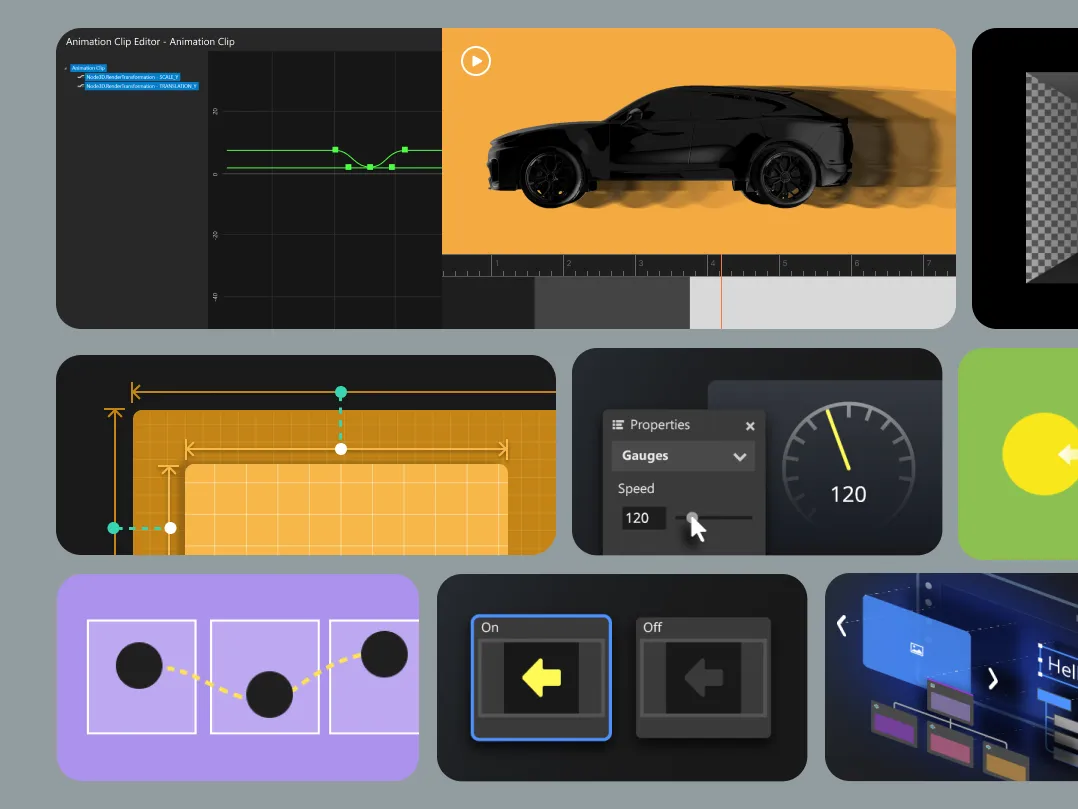
A product experience also needed a shared visual language.

Design principle focused on longevity
Visual component system for Kanzi Documentation
Grid system used in the Kanzi Documentation redesign
Design System

Documentation still reflected an older visual identity. I brought it into the wider Kanzi system through shared typography and components, defined illustration principles and responsive layouts, so documentation felt like part of the same product ecosystem.
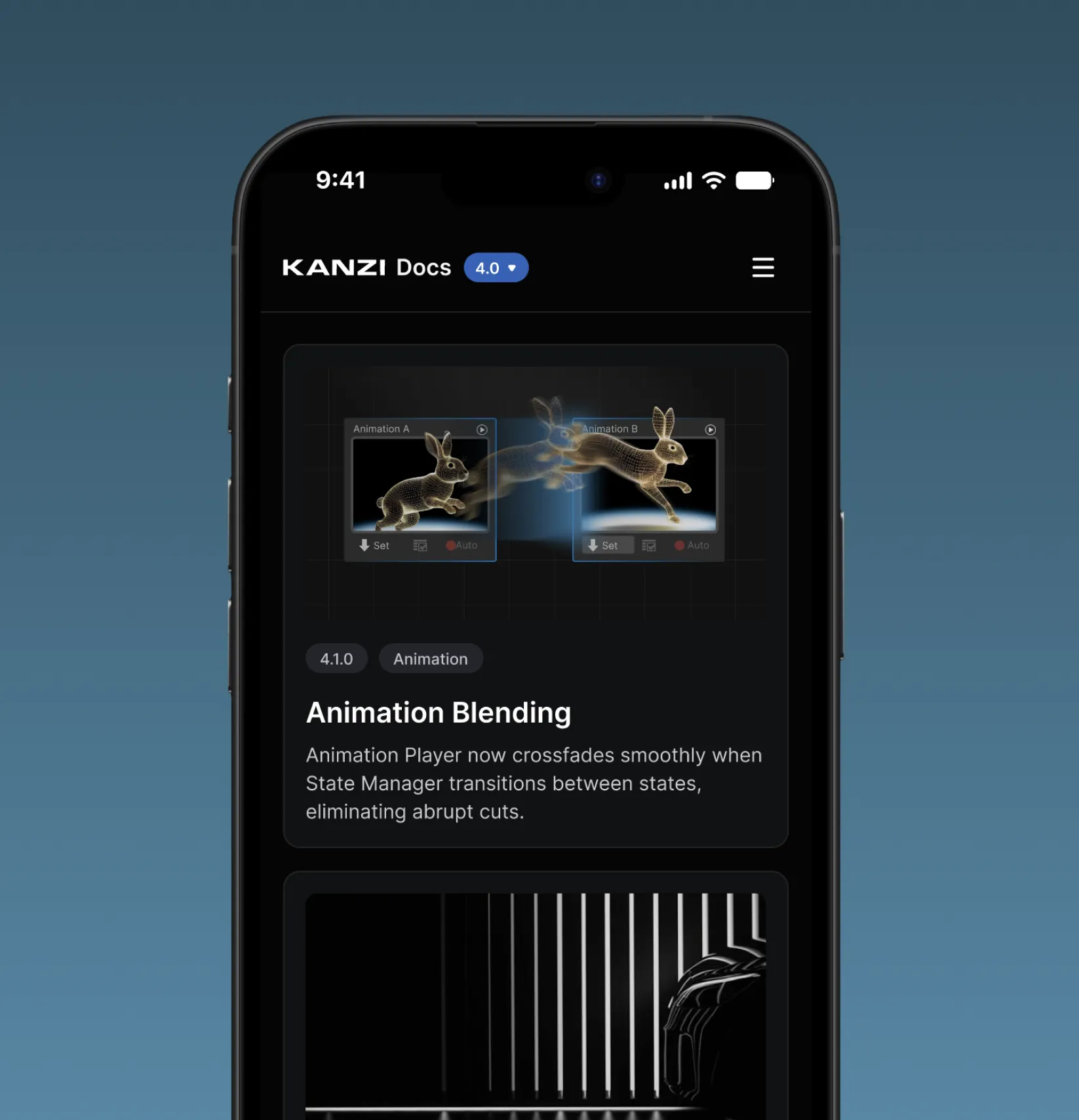
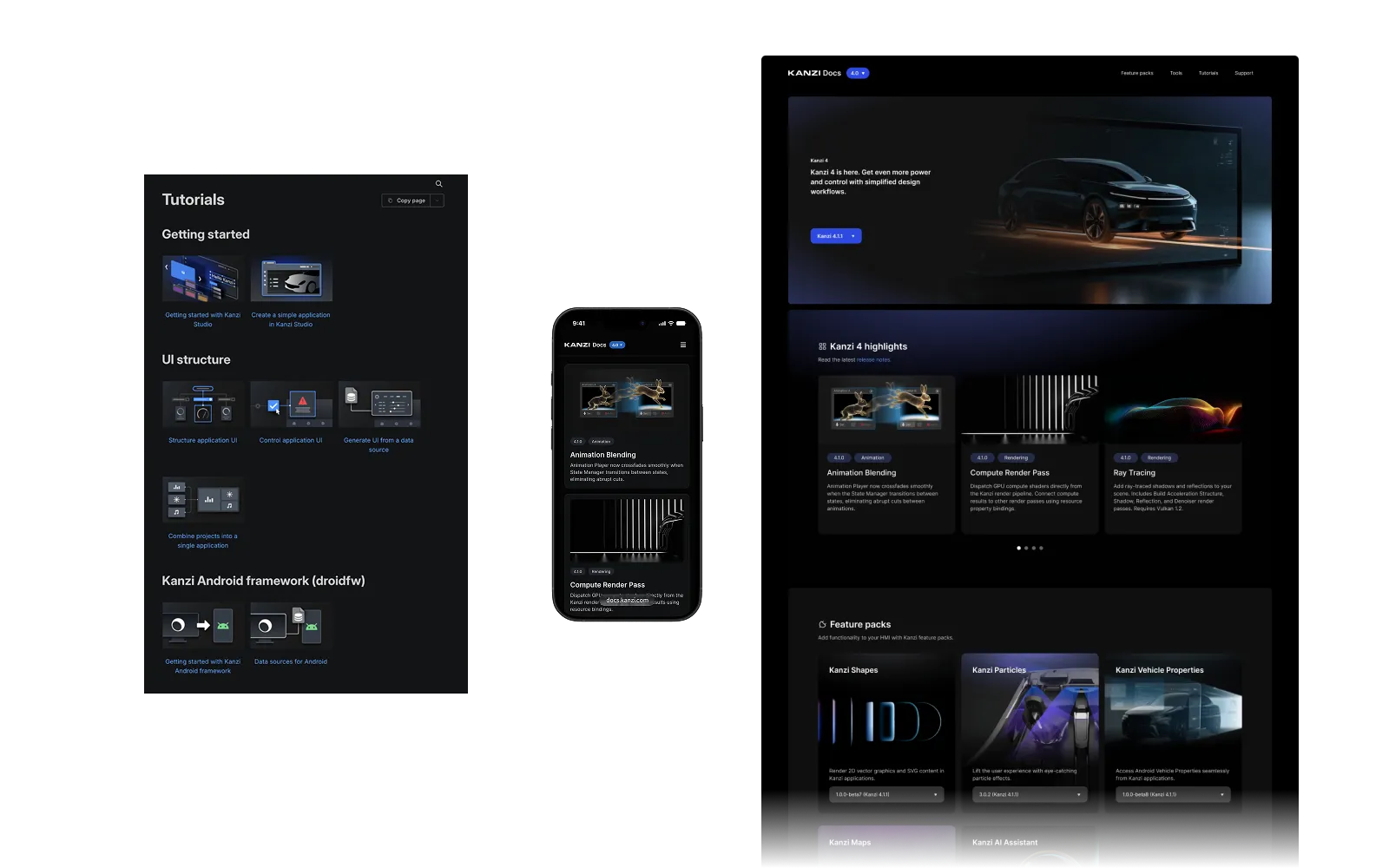
Mobile layout of the redesigned Kanzi Documentation

Documentation became part of the product journey

Redesigned Kanzi Documentation interface

Connected resources with a clear hierarchy.

Previous Kanzi Documentation interface

Fragmented information and inconsistent navigation.

Before After
Drag to compare. Or focus the handle and use the arrow keys.
The redesign changed more than documentation.
Release discovery, version access and learning resources became part of one connected documentation experience.

The feedback model also moved into Kanzi Studio, where selected features now capture user reactions directly and teams consider feedback collection when planning new functionality.
The biggest design decision was changing the scope.
Once documentation was treated as part of the wider product journey, the priorities became clearer: make releases easier to discover, versions easier to navigate, related resources easier to reach, and feedback easier to act on.